
Early 20th-Century Containers and Packaging as a Historical Source (Based on an Artifact from the Zhigulevsky Brewery)
Generally speaking, beer packaging for storage, transportation, and sale most often consists of barrels, bottles (and crates for them), as well as branded jugs and mugs when sold in pubs, taverns, and beer restaurants. Other packaging components include bottle and barrel caps, jug lids, and labels that were attached to bottles, and sometimes to crates and barrels. A rough idea of what beer packaging looked like before the Revolution can be gleaned from a number of previously published studies (Smirenny et al., 1998; Dovgan, 2000; etc.).
What information can containers and packaging provide as a historical source? At a minimum:
- about the beer packaging system itself in a given period;
- about the beer producer;
- about the manufacturer of the container itself;
- about the system of measures and weights in the brewing industry;
- about beer brands.
Of course, each type of container and packaging is in some way more useful than other types in terms of obtaining information. And any statistical sampling or at least comparison can only be carried out by studying those examples of containers, of which a sufficiently large number have survived to the modern period.
How irreplaceable is such a historical source? Of course, much of the same information can be contained in archival documents. But only on the condition that the documentation was properly maintained by the enterprises, that it was fully transferred to the archive, that it has been preserved there for more than a hundred years, through various cataclysms that occurred in Russia, and if a historian can be found who is able not only to thoroughly study the archive of a specific brewery, but also to travel to other regions of Russia (and beyond) to familiarize himself with the archives of glass, bottle, porcelain, and cork factories, as well as printing houses that produced containers and packaging for this brewery. Unfortunately, none of these points are ideal, or even acceptable.
Let us consider the situation with the complex of data collected by predecessors on breweries, glass and bottle factories, cork factories, printing houses, as well as the situation with the cataloging of such container samples as bottles, labels, and corks.
Breweries. The excisability of brewing production contributed to the inclusion of these enterprises in various pre-revolutionary industrial directories and reviews, however, these directories are full of errors and inaccuracies, the information itself is sparse, and its structure varies not only in different directories, but also in the same directory in relation to different enterprises. Moreover, the dynamism of this industry (opening and closing of factories, changes of owners and tenants) is such that to this day not only the main dates, but also all the owners and tenants of the factories have not been definitively established, despite the fact that there are several modern works of a general nature (Anikin, Fatyukhin, 2007; 2014; Malikov, 2007; 2008). However, some factories, including the Zhigulevsky Brewery, have been honored with separate studies , although in this case the author was more interested in the details not of the history of the factory, but in the biography of Alfred von Wacano and his relatives (Kazarin, 2001).
Glass and bottle factories. Specifically, no one has seriously studied the pre-revolutionary bottle factories of Russia in a general sense, and in general, only a few albums and catalogs of collections of various museums and exhibitions are devoted to glass factories and glass products of Russia before 1917 (Art Glass ..., 2006; Dolgikh, 1985; Russian Glass ..., 2015) and a monograph by N.A. Asharina (1998). The rest are articles and studies on individual factories. Even the logos of most glass factories are not precisely known or have not been determined, which is something that historians and collectors will continue to study for a long time, precisely on the basis of surviving bottle containers.
Cork factories of pre-revolutionary Russia have not yet been studied by anyone.
Printing houses. For any printing house, the production of labels for the brewing industry was only a small percentage of activity, until we came across studies that somehow isolated this type of product from the general range of printing house products.
Labels. There is no exact data on when labels appeared on beer bottles in Russia. Archival information has not yet been found, the surviving labels of the early versions themselves are not dated in any way, but there are assumptions about the beginning of their use in the 1870s or, more likely, in the 1880s. There are four theoretical sources with which one can catalog beer labels: the archives of printing houses, the archives of breweries, the archive of the state body that was engaged in the registration of logos and types of packaging until 1917, and, finally, the material objects themselves - labels preserved in museums and by collectors. However, the documents of both printing houses and breweries, contained in state or institutional (factory) archives of the few created Brewery records from pre-1917 breweries that are still in operation typically do not contain label samples or sketches; they are found only as exceptions to the rule. Breweries were not required to submit labels to the state registration authority; they did so only if they feared counterfeiting. In any case, when archival funds were evacuated to the Urals and Siberia at the beginning of the Great Patriotic War, this particular collection was never returned; its current location and whether it was destroyed remains unknown. Therefore, the existing label catalog is compiled primarily from surviving copies (Anikin, Fatyukhin, 2005), and this is likely just a drop in the ocean (by very rough estimates, fewer than 4,000 labels are known, while perhaps 50,000 or more actually existed). The catalog has already become outdated since its publication; every year, dozens of new labels are discovered in the attics of old houses, as bookmarks in antique books, glued to apartment walls, or glued to chest lids.
There are no printed scientific catalog publications on bottles at all, but one collector, with the help of fellow hobbyists, is creating an online catalog of bottles. More precisely, he has created several catalogs of various pre-revolutionary glassware – from beverages to medicine, perfumery, and others (source). Some of these catalogs have already gone through more than ten editions, due to new finds arriving annually. Again, as with labels, there is no data on when information about the brewery or entrepreneur appeared on the bottles. Probably ten to twenty years earlier than the labels. Few bottles from the 1880s to 1917 with labels have survived to make a definitive conclusion: whether the labels were mainly on unmarked bottles, or whether they indicated the brand of beer, while the bottle usually indicated only the producer.
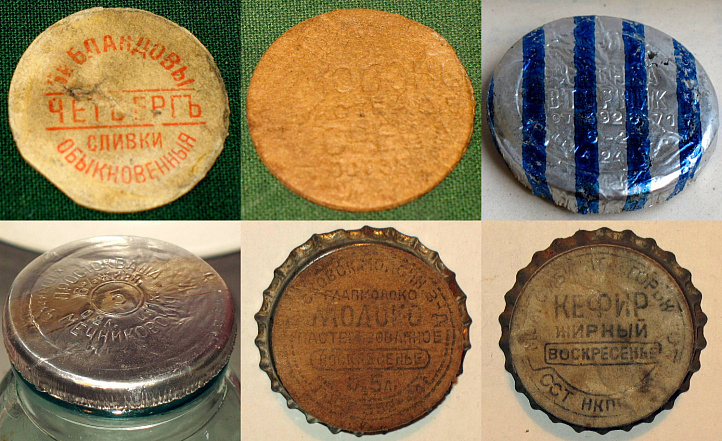
The situation with studying pre-revolutionary beer and other beverage caps is even worse. It's clear that cork was the earliest stopper used, but it's unknown when it began to contain information about the brewer (and sometimes the type or brand of beer). Compiling a catalog of such caps is a task for the future. Typically, the cap was either uncoated or additionally sealed with sealing wax. It's likely that by the end of the 19th century, the capsule cap appeared as an additional protection. It was most often made of tin foil or a thin sheet of other easily bendable metals and alloys. The capsule was pressed onto the neck of the bottle with the cork inserted. The capsule contained information about the brewer. At the beginning of the 20th century, another invention developed further on this type: the capsule cap. Several patents existed for variations of these corks – those of the Odessa Pobeda factory, A. Krigsman from Riga, and others. The main problem with the relatively dense metal of the capsule was its ability to be cut, so the capsule cork was perforated at the top. This perforation allowed the top of the cork to be torn off if necessary. It was on this part of the cork that information about the beer manufacturer was placed. Neither the capsules nor the capsules have yet been cataloged.
At the same time, following the experience of Germany and other Western European countries, we began to use porcelain hook-and-loop corks. They probably appeared in Russia in the 1880s, almost immediately after their invention in Europe. This cork, like a stopper with a thin, usually rubber, gasket between the cork and the bottle, was attached to the bottle using a special wire device with a stopper that pressed the cork firmly against the bottle. Thanks to this mechanism, the cork was not lost after the bottle was opened, but could be returned at any time. The bottle with the cork became reusable. These corks (used not only for beer, but also for other liquids, not only food, but also for medicinal and household purposes) also contained information about the manufacturer of the bottle's contents. This type of cork, almost inextricably linked with bottles, has already begun to be cataloged by the same collector who catalogs bottles (source). But this is a long way from completion.
Another type of cork, invented in the pre-revolutionary period, is the crown cork (their modern version is the metal cork with teeth on glass beer bottles). They were used in the USA and Western Europe, but no documented evidence of their use in Russia has yet been found. Although one similar type of cork - the Zhigulevsky Brewery - is described in this article.
The Zhigulevsky Brewery, thanks to the tireless work of the von Wacano family, was one of the largest breweries in Russia in terms of production volume at the beginning of the 20th century, a branch was created in Baku, there were dozens of warehouses of the plant throughout most of the country, and practically Each warehouse not only sold bottled products but also bottled them on-site. Consequently, a large number of the plant's bottles and labels have survived. Known types of the plant's bottles and most of the known varieties of pre-revolutionary labels are listed in the aforementioned bottle and label catalogs, as well as in the online Beer Museum of the Russian Empire (source). Information about corks is considerably less available. A serious record of found corks had not yet been kept, and no one had systematically posted the plant's corks in either print or electronic format. However, initial impressions from the collected information indicate that the plant's primary cork type was cork. A small number of capsule and capsule corks were found, no bow corks were ever encountered, and one type of crown cork was discovered.
Of all the types of containers and packaging for Zhigulevsky brewery beer, only the labels have been used in scientific research as a historical source (Morozov, 2012).

As a result of the above, the appearance of each new type of label, bottle, or cap can either slightly clarify something or lead to serious changes in views on the details of the history of the Zhigulevsky Brewery. This is how this cork [photo 1], the first example of which was discovered seven years ago in a pre-revolutionary building in Samara, came to the attention of historians in the fall of 2017. Since then, five more such corks have been discovered at different times in pre-revolutionary buildings in Samara and the surrounding region, including in the von Vakano kitchen (4 Krasnoarmeyskaya Street, Samara). All of these finds were made by so-called "searchers" and have since been distributed among private collections.
Archival documents are of no help in dating this cork: neither the Zhigulevsky Brewery archive nor the TsGASO contain information on the use of crown caps at the plant's beer until the second half of the 20th century. Furthermore, there is no detailed information there about the bottles, labels, or other types of corks used by the plant, either in the pre-revolutionary period or in the first half of the 20th century. And the archives of other Russian factories did not keep this information about their enterprises.
Therefore, we can only make assumptions - both based on the inscription and the drawing, and on the technical characteristics of the cork itself.
Technical characteristics: tin, embossed, 21 teeth, cork composite lining.
The crown cork was invented back in 1891 (patented since 1892) in the USA. However, American-made corks initially had more teeth, and most importantly, were not embossed, but with a colored pattern (at first they were generally without inscriptions and drawings). But A. von Wacano in any case would have ordered corks not from the USA, but from Europe, since all his connections were there.
There is no exact data on when the production of crown corks in Europe began, but it happened at the beginning of the 20th century. Embossed corks are a distinctly European innovation (Germany, Italy, etc.). The precise date when corks first acquired 21 teeth is unclear. However, the transition from natural cork seals to cork composites occurred almost immediately in Europe. Even in Russia, as early as 1908, the committee of the International Exhibition of Brewing, Hop Growing, Other Related Crops, and Mechanical Engineering awarded a large silver medal to Master of Pharmacy Khanovsky "for his invention of a method for producing artificial cork from cork production waste" (Vestnik..., 1908. P. 7). Consequently, cork could have been manufactured technologically as early as these years (and even before 1914, when Russian breweries virtually ceased beer production due to the introduction of Prohibition). This is also supported by published information about the appearance of this type of bottle closure on the Russian market in 1913 (report from Kazan - Echo..., 1913. pp. 8-9), caused by a conspiracy among cork producers to raise prices for their products. Due to new circumstances, ordering crown corks from Europe became cheaper than traditional bottle closures with cork stoppers plus a capsule or capsule. And Alfred von Wacano was a very progressive and efficient entrepreneur...
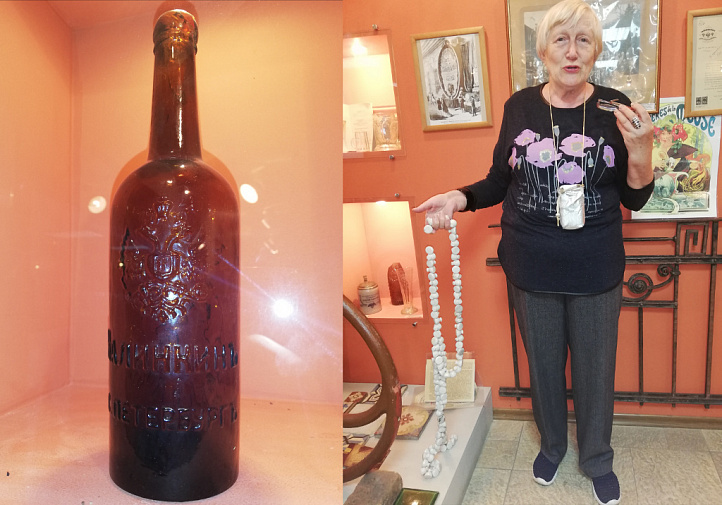
Another circumstance that may confirm the use of crown caps by the Zhiguli Brewery even before the revolution is the presence of this type of bottle, the rim of which is suitable for crown cap closures [photo 2].

But, to be fair, we should add that this crown cap is also suitable for capping with the "Ideal" capsule patented by A. Krigsman in Riga [photo 3], which was also available at the Zhigulevsk plant [photo 4].


However, so far no data has been found in the archives on the corking of beer at the Zhigulevsk plant in the pre-revolutionary period, either with crown caps or Kriegsmann corks, although bottles for these corks, as well as the corks themselves, are evident...
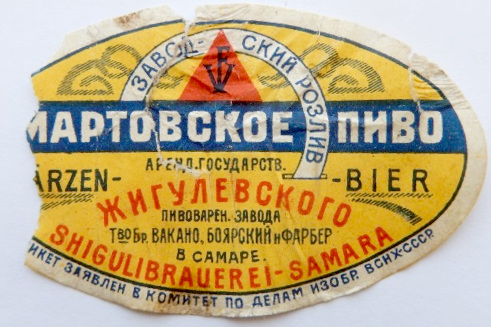
The triangle with VF in the center of the cork - the emblem of the founders of the Zhigulevsk plant, A. von Wakano and M.M. Faber - was the official logo of the plant throughout the pre-revolutionary period, and then reappeared again, apparently for a very short period, no earlier than 1923, when the plant was rented, and the children of Wakano and Faber were among the tenants. Moreover, the post-revolutionary period of use of this emblem became known only in 2017, when a label of the Zhigulevsk plant of the Partnership "Br.", found in Astrakhan, was published, which seems to be unique so far. "Vakano, Boyarsky and Farber" with this emblem [photo 5].

All other known labels of the plant from the NEP period already have a different emblem - in the triangle, VF is replaced by Ж [photo 6]. Either Boyarsky rebelled that his initial was not in the emblem, or the Soviet government opposed the fact that the emblem of a state-owned (even if rented) plant included the initials of the tenants, but the emblem was replaced, and a new one was approved on May 8, 1925 (registration certificate No. 215 - Vestnik..., 1926. Photo 4. Upper part from the cork P.57).

Opponents may point out that Zhigulevskoye beer only emerged as a brand in the mid-1930s (at the Zhigulevsk brewery, Venskoye was renamed Zhigulevskoye in 1936).

But it appears that this cork does not refer to a specific variety (unlike the cork above, according to Krigsman's patent, for the "Zhiguli" variety [photo 7]), but to the brewery's production in general. The phrase "Zhigulevskoye beer" in this sense was actively used before the revolution, as evidenced by numerous advertisements [photo 8, photo 9, photo 10].


Now let's try to assess the possibility of releasing this crown cap after the NEP (taking into account that this cork is not mentioned in the plant's archives after 1945, which is strange given the good selection of plant documentation in the post-war period). For example, let's assume that the cork could have been released for one of the plant's anniversaries. Technologically, starting from the 1930s, this is quite possible - the absolute majority of Soviet beer caps up until the 1990s were embossed.
It is highly doubtful that the personal monogram of private entrepreneurs - former owners of the plant - would have been passed by the party "censorship" during the period of industrialization, when they celebrated 50 years, that is, in 1931 (in (This was just the time when they were forced to give up the business of the last non-state producers), especially since there was an officially approved (for the period up to 1935) logo of the enterprise.
The next round date is the 75th anniversary of the plant, that is, 1956. This is still a period from which individual corks reach modern collectors (museums of containers of this period are of almost no interest yet). In contrast to the 1970-1980s, from which collectors know corks of the Zhigulevsky plant of all series and by all dates of production in the city of Kuibyshev. Consequently, this cork, if it were released in 1956, could theoretically remain unknown to this day, but the release of a similar cork for the 100th anniversary of the plant in 1981 would certainly not have gone unnoticed. In addition, starting in the 1960s, it became the norm to place the bottling date on an embossed beer cork. On the cork in question there is no such date.
However, in addition to caps, the anniversaries of the factories during the Soviet period were accompanied by labels, which, unlike tin caps, reach descendants in greater quantities. And not a single collection, including the general electronic database of Russian beer labels compiled by V. Zyazin with the help of all the world's famous collectors of this subject (source), contains a single Soviet anniversary label of the Zhigulevsky factory that would contain the pre-revolutionary monogram of A. von Wacano and M.M. Faber.
We should add that, in principle, there are no known anniversary labels of any brewery in the USSR that would replicate the pre-revolutionary symbols of the former owners. Which confirms the assumption that such an issue in the USSR would be unlikely. And yet, it cannot be completely ruled out.
Thus, based on the little available data, the probability of dating this cork (from greater to lesser probability): 1913-1914, 1923-1925, 1956. Everything else is unlikely.
Even if this cork was produced in 1923-1925, it is the earliest known crown cap not only of the Zhigulevsky Brewery, but of Russia in general.
Comments